What Happened to the Family That Was on Tlc About Being Poor

The Evans family from Practiced Times. Bern Nadette Stanis is 2d from left. The Kobal Collection hide caption
toggle explanation
The Kobal Collection

The Evans family unit from Good Times. Bern Nadette Stanis is second from left.
The Kobal Drove
Like it or not, television has the power to shape our perceptions of the world. So what exercise sitcoms, dramas and reality TV say about poor people?
In life and on Television, "poor" is relative. Have breakfast: For Beloved Boo Boo's family, it'due south microwaved sausage and pancake sandwiches; for children in The Wire's Baltimore ghetto, it'southward a juice box and a bag of chips before school; and on Expert Times, set in the Chicago projects back in the 1970s, information technology was a healthier pick: oatmeal.
"If you're poor, information technology goes a long mode — and information technology's pretty cheap," laughs Bern Nadette Stanis, who played Thelma Evans on Good Times.
Good Times debuted in 1974, in the midst of a recession. Many people were struggling, and for a time it was ane of the highest-rated shows on Television set — just Skillful Times as well drew criticism for giving the impression that being poor isn't and then bad, equally long as there's love.
But Stanis says that, based on her personal experience, that'due south true. "I likewise was raised in the projects in Brooklyn, N.Y., in the Brownsville neighborhood. I lived in a ii-bedchamber apartment with my mom and dad and five children, so there were 7 of us, only nosotros also were rich in education and in dear," says Stanis.

The reality TV show Here Comes Dear Boo Boo follows beauty pageant contestant Alana "Honey Boo Boo" Thompson and her family, documenting their daily life in rural Georgia. Discovery hibernate explanation
toggle caption
Discovery
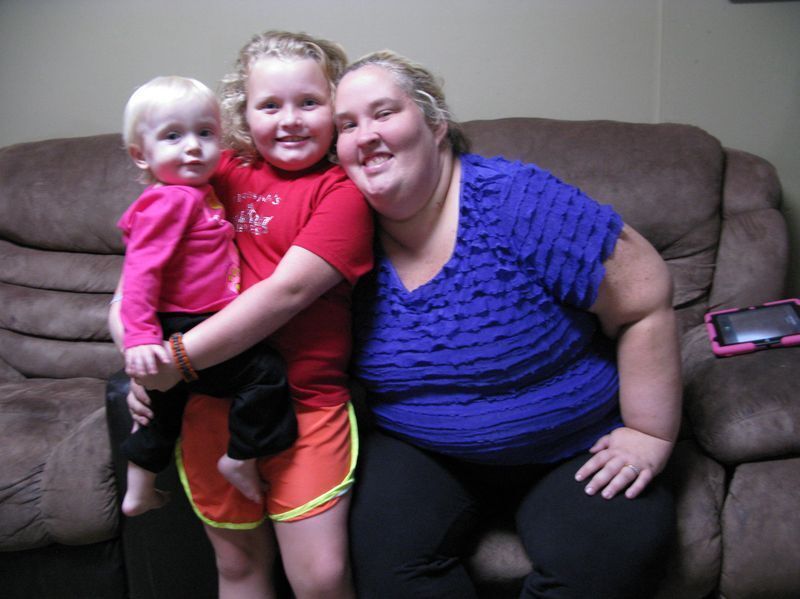
The reality TV show Here Comes Love Boo Boo follows beauty pageant contestant Alana "Honey Boo Boo" Thompson and her family, documenting their daily life in rural Georgia.
Discovery
Good Times also tackled some of the bad times facing poor communities, like drug addiction and gangs. Norman Lear, who co-produced the show, says that above all, they wanted to make people laugh — merely they too wanted story lines that resonated. Before the 1970s, he adds, Boob tube pretty much ignored poor people.
"The biggest subjects in telly comedy were 'The roast is ruined and the boss is coming to dinner,' or 'Mom dented the auto and how practise the kids and mom keep dad from finding out,' " says Lear. "In that location were no political problems. There was no poverty. That was the full message, wall to wall, flooring to ceiling."

Actors (from left) Jermaine Crawford, Maestro Harrell, Tristan Wilds and Julito McCullum portray students in the Baltimore public school system in The Wire. Paul Schiraldi/AP hide explanation
toggle explanation
Paul Schiraldi/AP
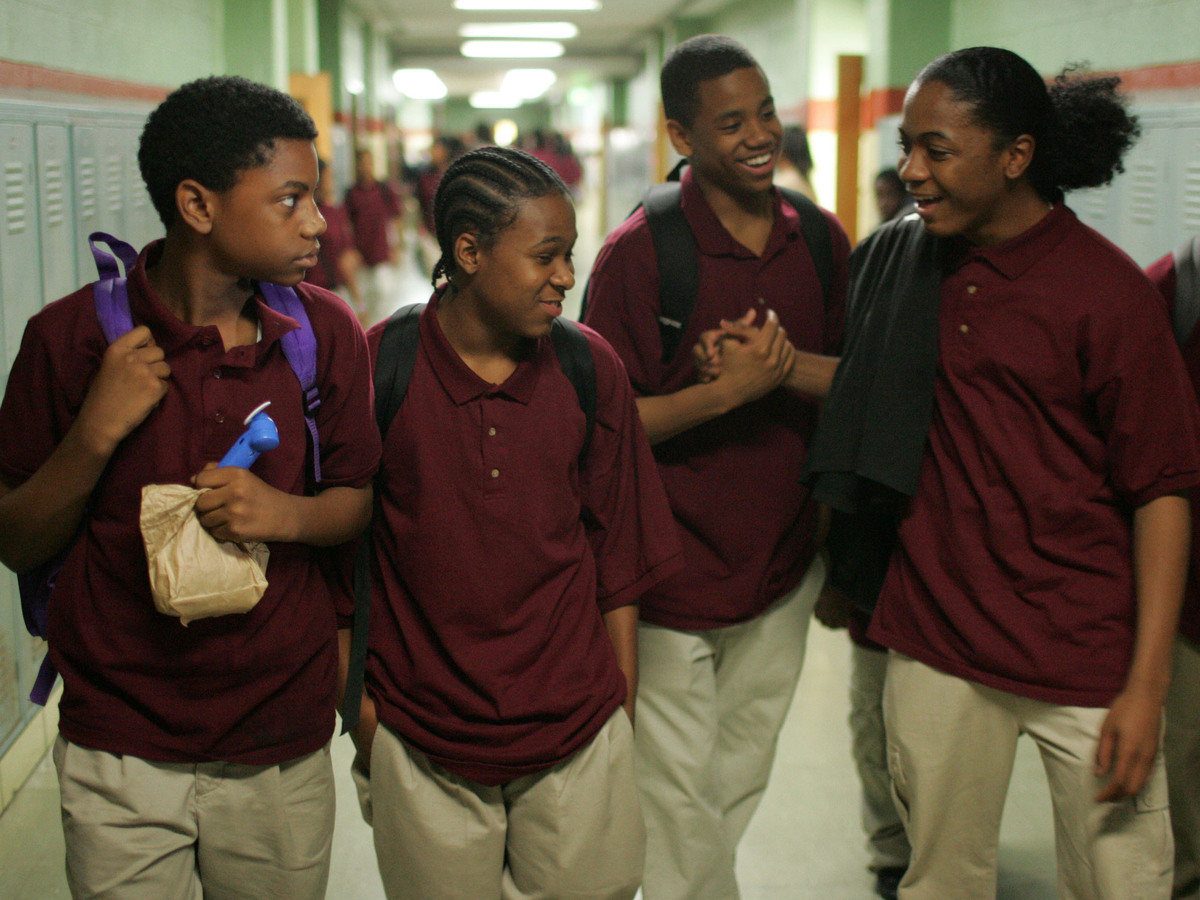
Actors (from left) Jermaine Crawford, Maestro Harrell, Tristan Wilds and Julito McCullum portray students in the Baltimore public school system in The Wire.
Paul Schiraldi/AP
At that place's a lot of debate about Television receiver's depiction of poverty. Practice audiences empathize with the poor people they see or wait down on them?
Have one of the about recognized — and reviled — of today'southward reality TV shows: TLC's Here Comes Honey Boo Boo. The Thompson family is overweight, crude and obsessed with kid beauty pageants. One critic in The Washington Times chosen Honey Boo Boo's family "stupid, lazy and hopeless." Another, in Salon, said it'due south an example of reality TV's "endless carnival of the impoverished-on-display."
Just journalist Nona Willis Aronowitz — who covers education for NBC — disagrees with the charge that the family is exploited. "I run across them existence very playful with each other and being unapologetic nigh their circumstances," she says.
David Simon, on the other hand, thinks reality Television set shows cater to stereotypes. "I can't go a handle on anything that's human being," says the creator of shows including HBO's The Wire and Treme.
Simon says his shows try to explore the human condition and create characters who live in poverty but still take distinct personalities, relationships and dreams. For example, in The Wire, set in Baltimore, a member of a drug coiffure looks after several children in the projects where they live.
"Nosotros were about the America that got left behind," says Simon. "We were proverb something legitimate well-nigh that portion of the land that doesn't accept a lot of television shows made about information technology."
The Wire was critically acclaimed and nominated for numerous awards, and was used at Harvard in a form on "urban inequality," but was never a ratings winner. Simon believes most Americans aren't interested in watching TV shows where the main characters are poor.
"They desire to picket shiny, pretty people," he says. "There are currencies in idiot box, and the two master currencies are sex and violence. The third i is laughs. And to the extent that poor people can suit those currencies, neat."
Sex and laughs are the currencies on the CBS sitcom 2 Bankrupt Girls. The master characters are two beauties: Max, who's been poor her whole life, and Caroline, who's newly poor now that her Bernie Madoff-blazon dad is in jail. They end upwardly waitresses at the aforementioned Brooklyn diner.
As unlikely as that might seem, Nona Willis Aronowitz says it rings true in this mail service-recession world. "In previous decades we might accept said, 'One is rich, one is poor, and never the twain shall meet.' Now one is broke and one is poor, and they're in the same job."
The nearly talked-nearly TV show depicting poverty right now is the gritty comedy-drama Shameless on Showtime. The show focuses on six unruly white siblings on the South Side of Chicago who are pretty much raising themselves. They political party, prune and even steal coupons, scam and — mostly — survive. They likewise have to deal with their deadbeat dad, an alcoholic who's often passed out.
Like many Television set shows virtually poor people that have come before information technology, the fictional Gallaghers of Shameless often use humor as a coping mechanism. Norman Lear says that's fine, so long every bit the poor characters are the ones making the jokes. "The human condition is sufficiently foolish to find comedy anywhere. People grinning through their lives," he says.
Lear should know — he grew up in the Low.
Source: https://www.npr.org/2014/08/05/337779030/from-good-times-to-honey-boo-boo-who-is-poor-on-tv
0 Response to "What Happened to the Family That Was on Tlc About Being Poor"
Post a Comment